AI Search Is Coming for Local Businesses: What to Do Now
Someone in Auburn is hungry right now, and they aren't scrolling through a page of search results to pick a place for dinner. They're asking ChatGPT, or reading the AI answer at the top of Google: "Where can I get good wings near me, and do they have naked wings?" A few seconds later, they have a name, a reason to go, and directions. If the AI doesn't know your business well enough to mention it, you didn't lose a spot on page two. You were never in the conversation.
The same thing is starting to happen with roofers, plumbers, dentists, boutiques, landscapers, and pretty much every other local business that depends on people finding them. This post covers what changed, how AI tools seem to decide which businesses to recommend, and what you can do about it this week without tearing your whole marketing plan apart.
I Was Using AI Search Before I Even Noticed
I didn't wake up one morning and decide to switch to AI search. It snuck up on me. I started out using it to get information on topics I was curious about. Then I used it to compare products before I bought them. Then one night I caught myself asking it to find the best hot wings within a 20 mile radius.

That's when it clicked. I was using it like a friend who knows every restaurant in town and doesn't mind a follow-up question.
It grew on all of us pretty quickly. I now know plenty of people who trust AI to find local businesses, and some of them trust it more than the map results on Google. The reason is simple: you can get more information from it. A map pack will show you three wing places with star ratings. An AI tool will tell you which one serves naked wings, which one has a patio, and which one people keep mentioning for their sauces. That's a different kind of search, and it rewards a different kind of business information.
One Answer Instead of a Page of Links
Traditional search gave people a list. If you weren't number one, you still had a shot at number three or seven, because people scrolled and compared.
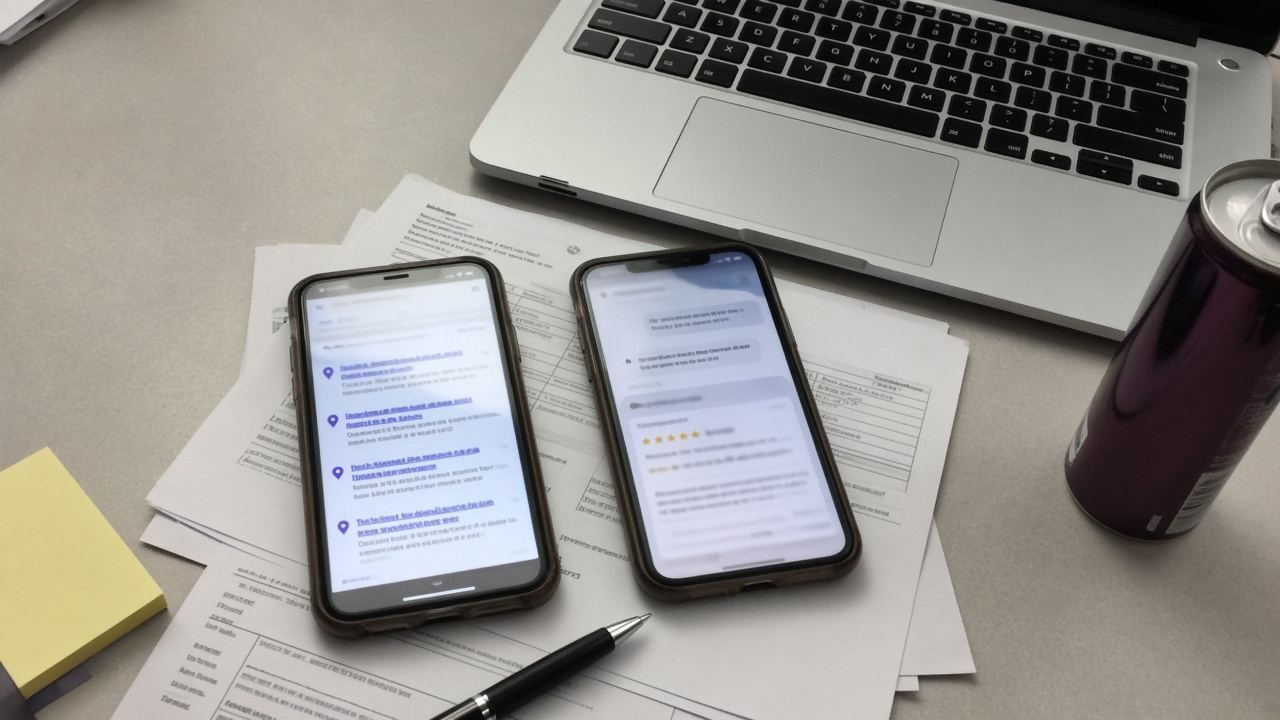
AI search usually gives people an answer. Sometimes it names one business. Sometimes it names a short handful and explains why each one made the cut. Either way, there are far fewer spots than there used to be, and the business that gets named has already been described to the customer before they ever visit the website.
That changes the stakes for a local business owner. Showing up somewhere on the page isn't enough anymore. The AI has to understand what you do, where you do it, and why someone would pick you, clearly enough that it's comfortable putting your name in its answer.
How AI Decides Who to Recommend
Nobody outside these companies knows the exact formula, and it keeps changing. What we can see is that these tools pull from the same places a careful customer would check, and they lean toward businesses that are easy to understand and easy to trust. In plain English, a few things carry a lot of weight.
A Website That Says Clearly What You Do
Your website is where AI tools go to learn the details. If your homepage says "quality service you can count on" and not much else, there's nothing useful for the AI to repeat. If it says you install metal roofs, repair storm damage, and serve Auburn, Opelika, and Lee County, that's information it can use when someone asks a specific question.
A Google Business Profile That Matches Everything Else
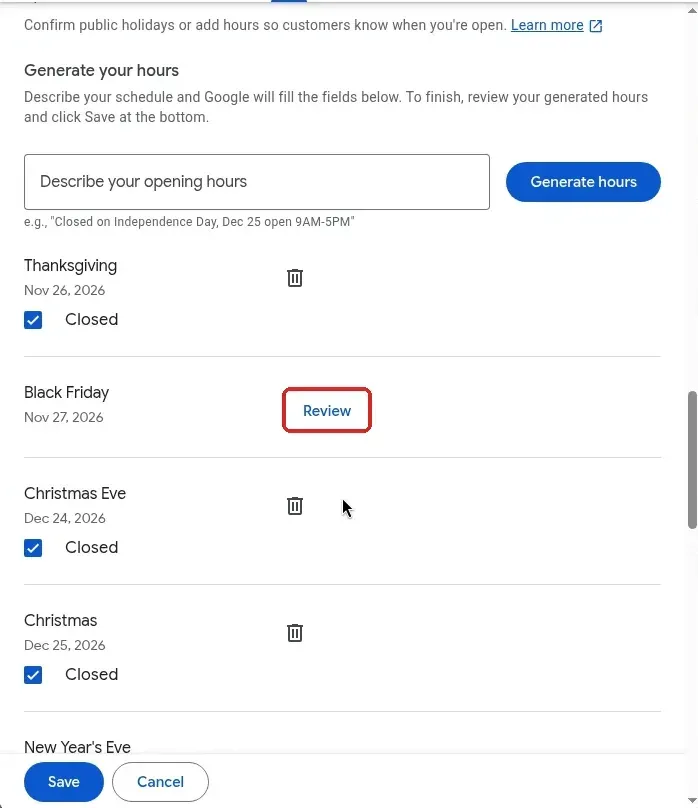
Your Google Business Profile, your website, and your listings on other sites should all agree on your name, phone number, hours, services, and service area. When those details conflict, the AI has a harder time being sure about you. When they line up, you look like a real, established business, because you are one.
Reviews That Say Something
Star ratings matter, but the words in your reviews matter too. A review that says "they fixed our leaking skylight the same afternoon" tells an AI tool far more than "great job!" Encouraging happy customers to mention what you actually did for them gives the AI real details to work with.
Pages That Answer Real Questions
People ask AI tools detailed questions. Do you work on weekends? Do you handle insurance claims? Do you serve Phenix City? If your website answers those questions in plain language, you give the AI something to point to. If it doesn't, the AI will find a business whose website does.
Generic Content Is Easy to Spot, for People and for AI
I've believed this for a long time, and AI search has only made it more important. A lot of local businesses never had website content that truly reflected their business. They had someone write something generic, or something built to hold a bunch of keywords, or they skipped the website content and relied on Google Ads to send people their way.
That approach worked well enough when search engines were mostly matching keywords. It doesn't hold up the same way now. If I can pick out pre-made generic content when I read it, AI can too, and it's less likely to recommend you because of it. A page that could be copied onto any company's website doesn't tell anyone, human or machine, why your company is the right call.
At A Guy That Designs, we've always been a fan of personalized content. That means writing about your actual services, your actual service area, and the things that make your business different from the one down the road.
What You Can Do This Week
You don't need a full website rebuild to get started. These steps are practical, and most of them only cost you some time.
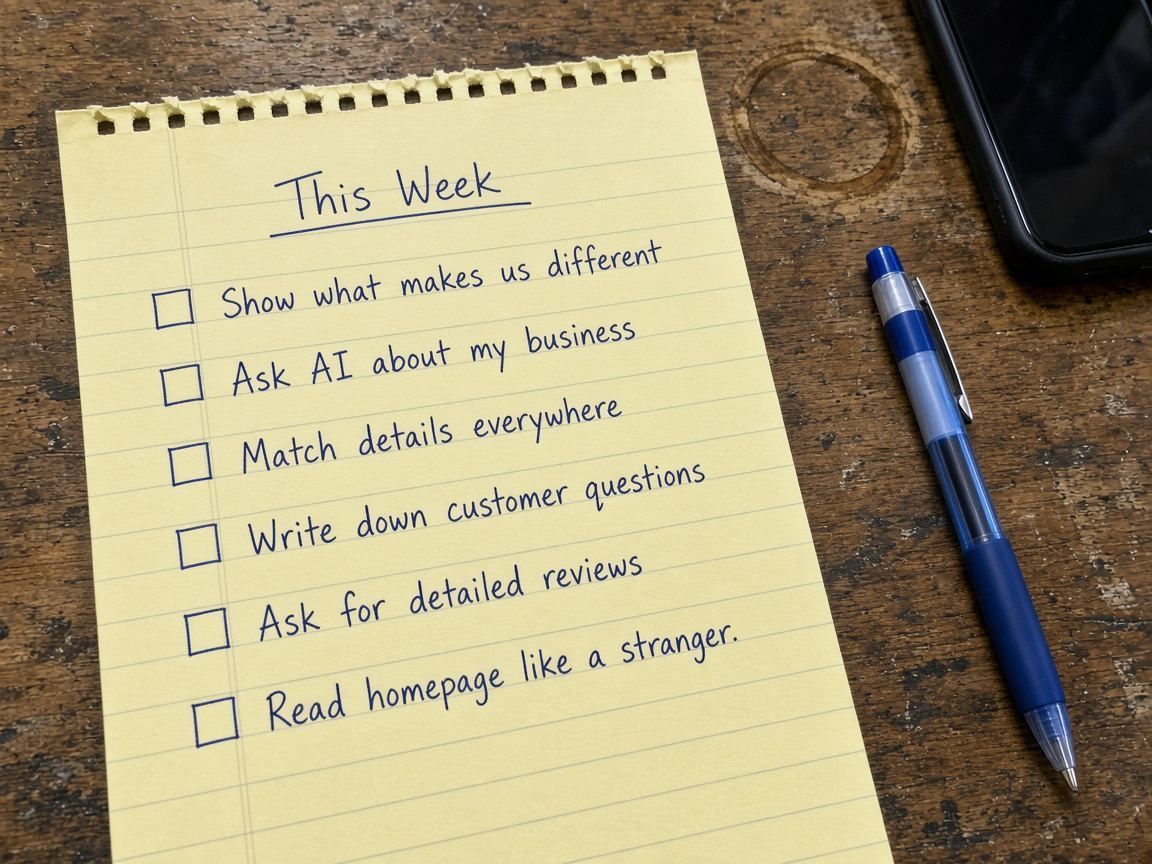
- Show what makes you different. Skip the same old "we put customers first" or "we treat you like family" lines that everyone writes. Say something only you can say, like "we've been one of the only companies in the area to install cedar shake roofing for 20 years." Put that on your homepage and in your Google Business Profile.
- Ask an AI tool about your business. Open ChatGPT or Google's AI answers and ask who the best company is for your service in your town. Then ask what it knows about your business by name. Write down what it gets right, what it gets wrong, and who it recommends instead.
- Check that your details match everywhere. Compare your website, Google Business Profile, Facebook page, and any directory listings. Fix any old phone numbers, hours, or addresses you find.
- Write down the questions customers ask you. Spend a week jotting down every question you hear on the phone or in person. Those questions are what people are asking AI tools, and each answer belongs on your website.
- Ask for reviews that include details. When a customer is happy, ask them to mention the service you provided and where you did the work. A sentence or two is plenty.
- Read your homepage like a stranger. If someone who had never heard of you read it, would they know exactly what you do, where you do it, and why they'd pick you? If not, that's the first page to rewrite.
"My Customers Just Use Google"
I hear this one a lot, and I get it. Plenty of customers still search the way they always have, and you don't have to choose between the two.
My answer is simple: imagine if you had those clients and the ones using AI too. The things that help AI tools understand your business, like clear service pages, honest details, and reviews with substance, also help the people who still find you through regular Google searches. You're not giving anything up by preparing for AI search. You're making your business easier to find and easier to choose in both places.
Find Out Where Your Business Stands
You're probably wondering what AI tools say about your business right now. I can help answer that. I'll check how your business shows up when people ask AI tools about your type of service in your area, and I'll walk you through what I find in plain language.
Want to see what AI tools say about your business? Send me a message through the contact page or give me a call, and I'll check your AI visibility and show you what's working and what's missing.
A Guy That Designs is based in Auburn, AL, and works with local businesses that want a website that actually sounds like them.
Share This Information